Introduction
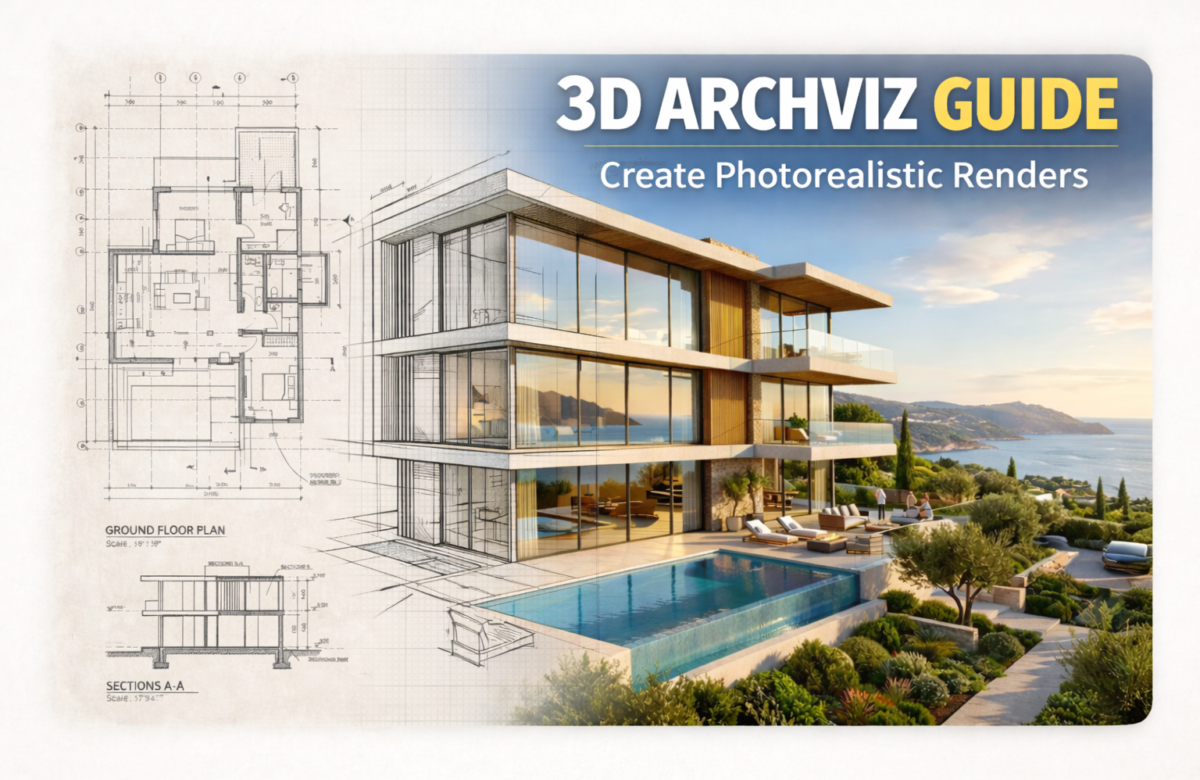
Architectural visualization has always been essential for communicating design ideas clearly. While technical drawings and blueprints work for architects, they often fail to convey the full vision to clients, investors, or buyers.
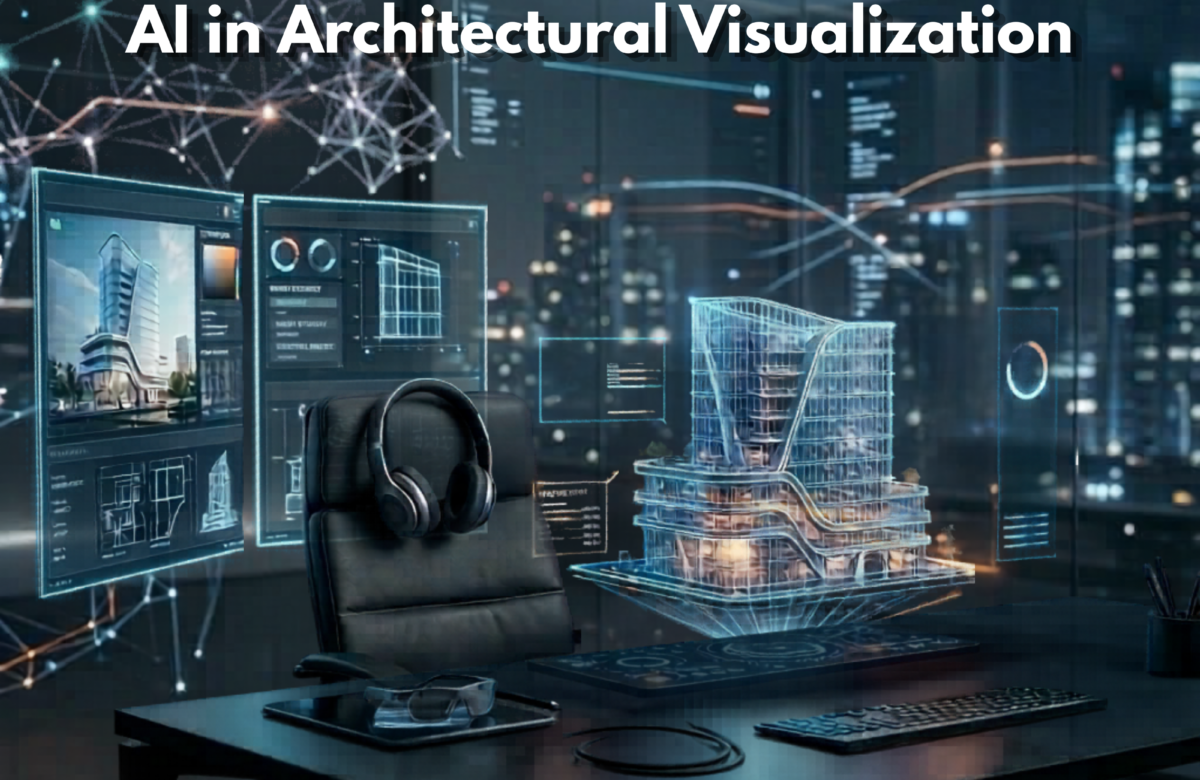
That’s where AI in architectural visualization is changing everything.
Traditional 3D rendering required hours of manual setup—materials, lighting, textures, and camera angles. Today, AI architectural rendering tools can generate high-quality visuals in minutes.
This shift is not just about speed. It’s redefining how architects design, present, and iterate projects in 2026.
What is AI in Architectural Visualization?
AI in architectural visualization refers to the use of machine learning algorithms to automate and enhance the rendering process.
Instead of manually configuring every detail, AI analyzes vast datasets of architectural images to understand:
-
Lighting behavior
-
Material properties
-
Environmental context
With this intelligence, AI 3D rendering tools can generate realistic visuals from:
-
Text prompts
-
Basic 3D models
-
Reference images
This allows architects to explore multiple design ideas quickly and efficiently.
For high-end visualization workflows, explore professional services:
https://rbxstudio.com/
How AI Tools Are Changing Architectural Rendering
Modern AI architecture tools are transforming how concepts are visualized.
Popular tools include:
-
Midjourney
-
Stable Diffusion
-
Adobe Firefly
These platforms allow architects to generate concept renders using simple prompts like:
“Modern luxury villa with glass facade, warm sunset lighting”
Within seconds, AI produces multiple variations—making AI visualization for architects significantly faster than traditional methods.
AI Integration with BIM Workflows
One of the most powerful advancements is the integration of AI into BIM software.
Tools like Veras work directly with:
-
Autodesk Revit
-
SketchUp
-
Rhino (Rhinoceros 3D)
Instead of exporting models, architects can generate visuals inside their workflow.
This improves:
-
Speed
-
Iteration cycles
-
Design accuracy
Explore workflow-based rendering services:
https://rbxstudio.com/services/3d-architectural-visualization/
AI Rendering vs Traditional Rendering
Traditional Workflow
-
Manual setup of scenes
-
Time-consuming rendering
-
Limited design iterations
AI Rendering Workflow
-
Automated material & lighting setup
-
Instant rendering outputs
-
Multiple variations in seconds
This is why AI rendering vs traditional rendering is becoming a key industry discussion.
AI can reduce rendering time by up to 90%, making it a game-changer in the architecture industry.
Technologies Powering AI 3D Rendering
Several advanced technologies are driving architectural visualization technology forward:
1. NVIDIA DLSS
Uses AI to upscale images while maintaining high quality, improving rendering speed.
2. Real-Time Rendering Engines
These engines allow architects to experience designs interactively in real time.
NeRF Technology: The Future of 3D Visualization
One of the most exciting innovations is Neural Radiance Fields (NeRF).
NeRF allows AI to create 3D environments using only 2D images.
Applications include:
-
Site documentation
-
Heritage preservation
-
Digital twins
-
Virtual walkthroughs
This is a major shift in the future of 3D rendering.
Real-World Adoption of AI in Architecture
Top firms like Zaha Hadid Architects are already using AI-powered platforms such as NVIDIA Omniverse.
These tools enable:
-
Real-time collaboration
-
Faster decision-making
-
Seamless team workflows
This shows how AI in architecture industry is moving from experimentation to real-world implementation.
Challenges of AI in Architectural Visualization
Despite its advantages, AI introduces challenges:
1. Data Bias
AI models may replicate repetitive or biased design styles.
2. Lack of Human Context
Architecture requires cultural and social understanding that AI cannot fully interpret.
3. Responsibility
Architects are still responsible for safety, compliance, and structural integrity.
Will AI Replace Architects?
No—AI will not replace architects.
Instead, it enhances their capabilities.
AI handles:
-
Repetitive rendering tasks
-
Fast visualization
-
Concept generation
Architects focus on:
-
Design thinking
-
Problem-solving
-
Human-centric spaces
This collaboration defines the future of AI visualization for architects.
The Future of AI in Architectural Visualization
The future is hybrid.
-
AI will dominate speed and automation
-
Humans will drive creativity and decision-making
Soon, architects will:
-
Generate ideas instantly
-
Visualize concepts in real time
-
Deliver faster client presentations
Studios that combine AI architectural rendering with human expertise will lead the market.
How Architects Can Actually Start Using AI Today
While AI in architectural visualization sounds exciting, a common question many architects and studios still have is:
“Where do I even start?”
The good news is that adopting AI doesn’t require completely changing your workflow overnight. In fact, the most effective approach is to gradually integrate AI into your existing design and visualization process.
The easiest entry point is during the concept design stage.
Instead of starting with detailed 3D modeling, architects can use AI tools to quickly explore ideas. Platforms like Midjourney or Adobe Firefly allow designers to generate multiple design directions using simple text prompts.
This is especially useful when working with clients who are unsure about what they want. Instead of spending hours modeling different options, you can generate a range of visual concepts within minutes and use those as a discussion starting point.
Once the direction is finalized, the process can move into traditional modeling software like Autodesk Revit or SketchUp.
From there, AI tools like Veras can be used to quickly generate realistic previews without setting up full rendering scenes.
This hybrid workflow allows architects to maintain control while still benefiting from AI speed.
The Role of Prompt Engineering in Architectural Visualization
One skill that is becoming increasingly important in AI-driven workflows is prompt engineering.
At first glance, writing prompts may seem simple. But in reality, the quality of AI-generated images depends heavily on how clearly the architect communicates their vision.
For example, a vague prompt like:
“modern house”
will produce generic results.
But a detailed prompt like:
“minimalist modern villa with large glass facade, concrete textures, tropical landscaping, soft sunset lighting, ultra realistic architectural visualization”
will generate much more refined and usable outputs.
Architects who invest time in learning how to write better prompts will have a significant advantage.
It’s similar to learning how to brief a 3D artist — the clearer the direction, the better the outcome.
Where Traditional Rendering Still Wins
Even with all the advancements in AI, traditional rendering is not going anywhere.
There are still many situations where manual rendering tools outperform AI.
For example:
-
High-end marketing visuals for real estate projects
-
Product-accurate material rendering
-
Technical presentations requiring precision
-
Branding-focused architectural visuals
Software like V-Ray, Corona Renderer, or Unreal Engine still offer unmatched control over lighting accuracy, reflections, and material detailing.
AI-generated images, while impressive, can sometimes lack consistency or produce unrealistic details when examined closely.
This is why most professional studios are moving toward a hybrid workflow rather than completely replacing traditional methods.
AI is used for speed and ideation.
Traditional rendering is used for final output and perfection.
How AI is Changing Client Expectations
One of the less talked about impacts of AI in architectural visualization is how it is changing client expectations.
Clients are no longer satisfied with waiting days for visual updates.
As AI tools make rapid visualization possible, clients are starting to expect:
-
Faster turnaround times
-
More design options
-
Real-time changes during meetings
-
Better visual communication
This shift means that architects and studios need to adapt not just technically, but also in how they manage client relationships.
The ability to quickly visualize ideas is becoming a competitive advantage.
Studios that adopt AI tools early can position themselves as more efficient, modern, and responsive.
AI and the Business Side of Architecture
Beyond design and visualization, AI is also impacting the business side of architecture.
Firms can now:
-
Reduce dependency on large rendering teams
-
Lower outsourcing costs
-
Deliver projects faster
-
Take on more clients simultaneously
For smaller studios, this is a huge opportunity.
Previously, competing with large firms required significant investment in rendering infrastructure and manpower.
Now, AI tools are leveling the playing field.
A small team with the right workflow can produce visuals that match the quality of larger firms.
This democratization is one of the biggest long-term impacts of AI in the architecture industry.
Challenges You Should Be Aware Of
While AI offers many advantages, it’s important to approach it with realistic expectations.
Some common challenges include:
Inconsistent Outputs
AI-generated visuals can sometimes produce unexpected or inaccurate details, especially in complex scenes.
Lack of Technical Accuracy
AI does not understand construction logic, structural behavior, or building codes.
Over-Reliance on Automation
Relying too much on AI can reduce design originality if not used carefully.
Learning Curve
While AI tools are faster, they still require time to master — especially prompt writing and workflow integration.
Being aware of these limitations helps architects use AI more effectively.
The Next 5 Years: What to Expect
Looking ahead, AI in architectural visualization is only going to become more advanced.
We can expect:
-
Real-time AI rendering directly inside modeling software
-
More accurate material and lighting simulations
-
AI tools that understand architectural intent better
-
Integration with AR/VR for immersive presentations
-
Automated design suggestions based on site data
Technologies like Neural Radiance Fields will also continue to evolve, making it easier to create digital environments from real-world data.
In the near future, the gap between concept and visualization may become almost non-existent.
Frequently Asked Questions (FAQs)
1. What is AI in architectural visualization?
AI in architectural visualization refers to the use of artificial intelligence to automate and enhance the process of creating architectural renders. Instead of manually setting up lighting, materials, and environments, AI tools can generate realistic visuals quickly using machine learning and data patterns.
2. How is AI changing architectural rendering?
AI is transforming architectural rendering by making it faster and more efficient. What once took hours can now be done in minutes. Architects can generate multiple design options instantly, making it easier to explore ideas and present them to clients.
3. Can AI replace architects or 3D artists?
No, AI cannot replace architects or 3D artists. While AI can generate images and speed up workflows, it lacks the understanding of design logic, building regulations, and human experience. Architects are still essential for decision-making and creativity.
4. What are the best AI tools for architectural visualization?
Some of the most popular AI tools include Midjourney, Stable Diffusion, and Adobe Firefly. These tools help generate concept images quickly and improve design workflows.
5. What is the difference between AI rendering and traditional rendering?
Traditional rendering requires manual setup of materials, lighting, and camera angles, while AI rendering automates most of these tasks. AI focuses on speed and idea generation, whereas traditional rendering offers more control and accuracy.
6. What is NeRF in architecture?
Neural Radiance Fields (NeRF) is a technology that creates 3D scenes from multiple 2D images. It allows architects to generate virtual environments and walkthroughs without manually modeling every detail.
7. Is AI architectural visualization expensive?
AI tools are generally more cost-effective compared to traditional rendering setups. Many platforms offer subscription-based pricing, making high-quality visualization accessible even for small studios and freelancers.
8. How can architects start using AI?
Architects can start by using AI tools for concept design and early-stage visualization. They can integrate AI into existing workflows with BIM software and gradually adopt a hybrid approach combining AI and traditional rendering.
Conclusion
AI in architectural visualization is not just a trend—it’s a transformation.
From automated rendering workflows to advanced technologies like NeRF, AI is reshaping how architecture is designed and presented.
However, the real power lies in combining:
-
AI efficiency
-
Human creativity
-
Architectural expertise
Because while AI can generate visuals, only architects can create meaningful spaces.