In today’s competitive architecture and real-estate industry, a drawing or blueprint alone is rarely enough to convince a client. Most clients cannot visualize a building from technical plans, elevations, or construction drawings. They need to see the future before it exists, and that is exactly where 3D architectural visualization becomes essential.
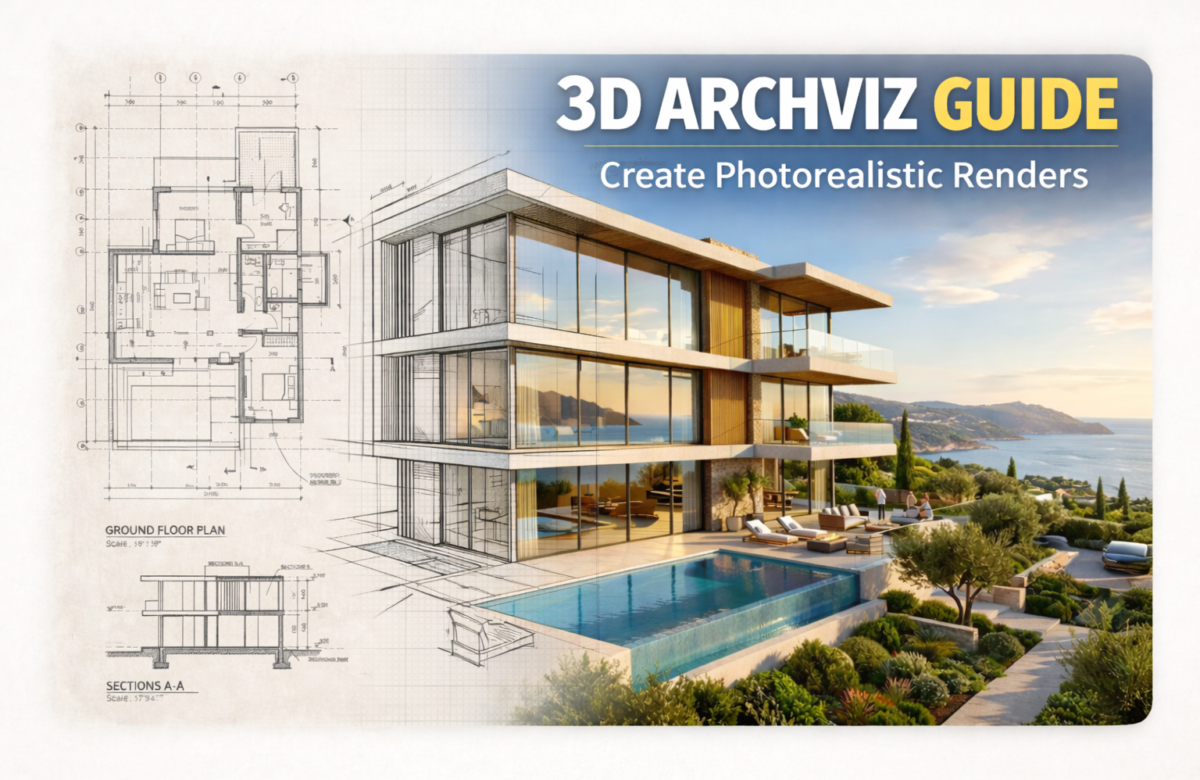
3D architectural visualization allows architects, developers, and real-estate professionals to present projects in a realistic and compelling way before construction even begins. Instead of imagining a building from drawings, clients can experience the design through photorealistic architectural rendering that shows materials, lighting, atmosphere, and scale.
This is why 3D architectural visualization and architectural rendering have become powerful tools in modern architecture and real-estate marketing.
A well-crafted 3D architectural rendering does more than simply show a building. It communicates scale, environment, lifestyle, and emotion. High-quality 3D visualization helps investors, developers, and buyers understand the full vision of a project long before the first brick is laid.
Because of this growing demand, the 3D architectural visualization industry has expanded rapidly. Reports suggest that the global architectural visualization market is expected to reach nearly $12.7 billion by 2030, highlighting how important photorealistic rendering and 3D visualization services have become for architects and developers.
However, while many companies offer 3D rendering services, only a few truly master the art of high-end architectural visualization.
Many projects fail because the renderings feel artificial, lifeless, or unrealistic. Poorly executed architectural rendering can actually reduce client confidence instead of strengthening it.
At Renderboxx Studio, our approach to 3D architectural visualization focuses on four essential elements:
• Technical precision
• Strong visual composition
• Storytelling through imagery
• Efficient rendering workflow
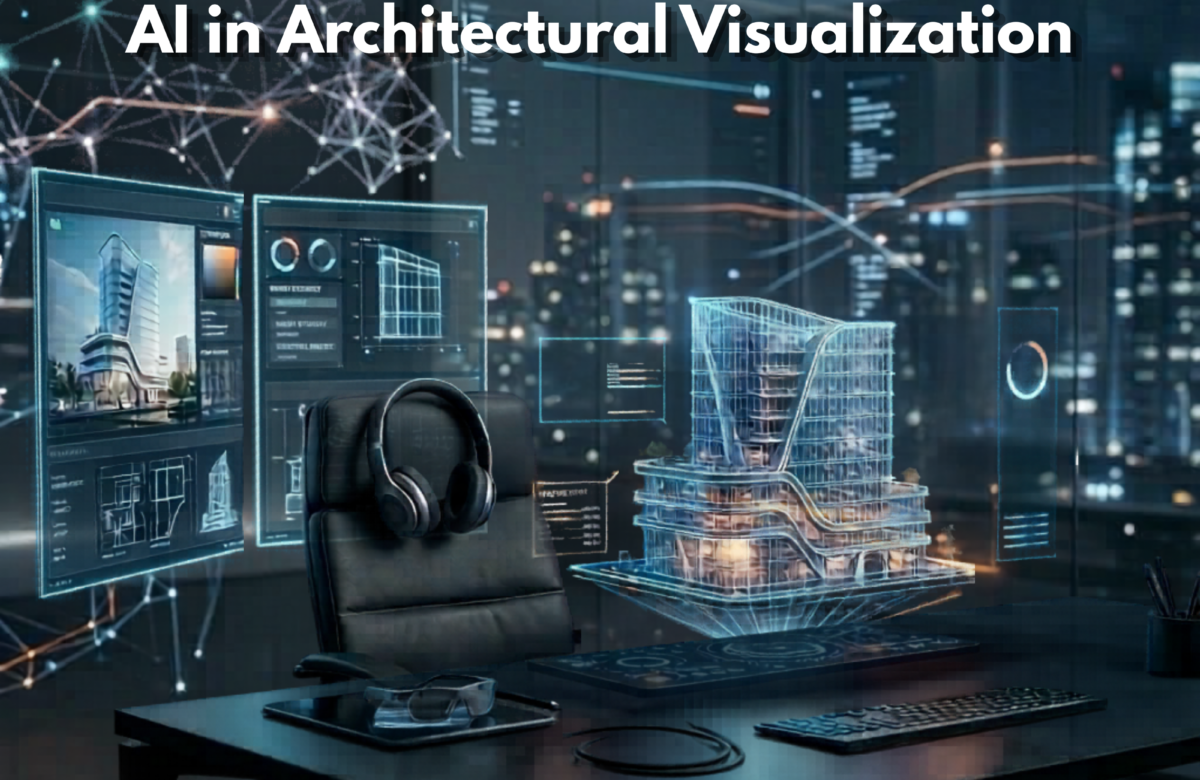
In this guide, we will explore the key principles that transform ordinary 3D architectural renders into powerful marketing visuals.
1. The Technical Foundation of 3D Architectural Visualization
The success of any 3D architectural visualization project begins with realism.
Even people without technical knowledge can immediately sense when a 3D rendering looks unnatural. Sometimes they cannot explain the issue, but they instinctively feel that the image is not believable.
When this happens, the credibility of the entire project can suffer.
Creating convincing architectural visualization requires understanding how the real world behaves — especially when it comes to lighting, materials, shadows, and textures.
Lighting: The Most Important Element in Architectural Rendering
Lighting plays the most important role in photorealistic architectural rendering.
In real life, light behaves in complex ways. It reflects, diffuses, and bounces between surfaces. A realistic 3D architectural visualization must simulate these natural lighting behaviors accurately.
If lighting is flat or evenly distributed across the scene, the rendering immediately looks artificial.
Professional architectural visualization studios carefully control lighting to create depth and realism.
One important technique used in 3D architectural rendering is HDRI environment lighting, which helps simulate real outdoor lighting conditions.
However, a common mistake is failing to align HDRI lighting with the sun direction. When shadows fall in the wrong direction compared to the sky lighting, the architectural render instantly loses realism.
Another essential element is Global Illumination (GI). In real environments, light bounces between surfaces and carries subtle color information.
Properly balanced GI is essential for producing photorealistic architectural visualization.
Finally, contact shadows are small but critical details. These subtle shadows where objects meet surfaces help ground elements in the scene. Without them, buildings or objects may appear to float.
Often, the realism of 3D architectural visualization depends on such subtle details.
2. Materials and Textures in Architectural Visualization
Materials are a crucial component of architectural rendering because they communicate the quality and character of the building.
When clients view a 3D architectural render, they subconsciously judge the design based on materials like concrete, glass, stone, metal, and wood.
If textures appear blurry, stretched, or repetitive, the quality of the architectural visualization immediately drops.
Modern 3D rendering workflows rely heavily on Physically Based Rendering (PBR) materials.
These materials simulate real-world surfaces through multiple texture maps such as:
• Normal or bump maps for surface detail
• Roughness maps for reflections
• Displacement maps for geometric depth
For example, in high-quality architectural rendering, a brick wall should show depth between bricks and mortar joints instead of appearing completely flat.
Glass surfaces should also reflect the environment realistically while maintaining transparency.
One important secret in photorealistic architectural visualization is that perfection often looks fake.
Real-world environments contain small imperfections like dust, scratches, stains, or surface variation.
Adding these subtle imperfections helps create believable 3D architectural renders.
At Renderboxx Studio, we often say that imperfection is the secret ingredient of photorealistic rendering.
3. Composition in 3D Architectural Rendering
Even technically perfect 3D architectural visualization can fail if the composition is weak.
Composition determines how viewers experience the architectural render.
A well-composed 3D architectural rendering guides the viewer’s eye toward the main subject — the building.
However, many renders suffer from repetitive camera angles that make the image feel flat and uninspiring.
Avoiding the Eye-Level Trap
One common mistake in architectural visualization is placing the camera at an awkward height.
Many artists position the camera around 8–10 feet high. This perspective is neither true human eye level nor a proper aerial shot, which creates an unnatural feeling.
In professional 3D architectural visualization, camera placement is chosen strategically.
A human eye-level camera angle (around 5–6 feet) helps viewers imagine themselves standing in the space.
Meanwhile, higher perspectives provide context by showing surrounding buildings, roads, and landscapes.
Different camera angles allow architectural visualization studios to communicate different aspects of the design.
Low angles emphasize height and grandeur, while aerial views highlight site context and urban relationships.
4. Using Negative Space in Architectural Visualization
In design, the building represents positive space, while the environment around it is considered negative space.
Many beginner artists overcrowd their 3D architectural renders with unnecessary elements.
Too many trees, vehicles, or decorative elements can distract from the architecture.
Good architectural visualization balances detail with clarity, allowing the building to remain the main focus.
Sometimes the most powerful architectural renderings rely on simplicity rather than excessive detail.
5. Storytelling Through 3D Architectural Visualization
Modern clients expect more than just technical visuals.
They want to understand how a building will feel in real life.
This is where storytelling in architectural visualization becomes important.
A successful 3D architectural rendering communicates lifestyle, mood, and atmosphere.
Luxury residential projects may use warm lighting and landscaped environments to create a sense of comfort and exclusivity.
Commercial office projects may highlight daylight and urban activity to convey productivity and energy.
The narrative behind the image plays a critical role in architectural visualization marketing.
6. Using Entourage in Architectural Rendering
In 3D architectural visualization, supporting elements such as people, vehicles, and landscaping are called entourage.
These elements add life and scale to the architectural render.
However, they must be used carefully.
Unrealistic characters or mismatched vehicles can break the illusion of realism.
For example, placing luxury sports cars in a rendering of affordable housing creates an inconsistent visual message.
Professional architectural visualization studios ensure that entourage elements match the project’s target audience and location.
7. Avoiding the Uncanny Valley in 3D Rendering
The uncanny valley occurs when an image looks almost real but not quite perfect.
This phenomenon can make 3D architectural visualization feel unnatural.
In many cases, overly perfect surfaces or unnatural human models create this effect.
To avoid the uncanny valley, artists must introduce variation and natural imperfections.
Believability is more important than perfect realism in architectural rendering.
8. Workflow Efficiency in Architectural Visualization
Producing high-quality 3D architectural visualization also requires an efficient workflow.
Many projects face delays because the original 3D models are poorly prepared.
Unclean models may contain unnecessary geometry or incorrect scaling, which can slow down the rendering process.
Professional architectural visualization studios ensure that models are properly optimized before rendering begins.
This improves both render quality and production speed.
9. Post-Production in Architectural Rendering
Even the best 3D architectural render often requires refinement during post-production.
Professional architectural visualization workflows involve compositing multiple render layers.
Elements such as sky, vegetation, people, and vehicles can be rendered separately.
This approach allows artists to make adjustments quickly without re-rendering the entire scene.
Post-production techniques such as depth of field, atmospheric haze, lens flare, and color grading help enhance the final architectural visualization.
10. The Future of 3D Architectural Visualization
Technology is rapidly transforming the architectural visualization industry.
Artificial intelligence is beginning to assist with tasks such as:
• Optimizing 3D models
• Enhancing textures
• Suggesting lighting setups
• Generating realistic environments
Rather than replacing artists, these tools help architectural visualization studios improve speed and consistency.
The future of 3D architectural rendering will combine creative expertise with advanced technology.
11. The Business Value of Architectural Visualization
Ultimately, 3D architectural visualization is not just about creating beautiful images.
It is about communicating ideas and winning projects.
Studies show that clients strongly prefer projects presented through photorealistic architectural rendering rather than traditional drawings.
High-quality 3D rendering services can lead to:
• Faster project approvals
• Better client understanding
• Fewer design revisions
• Stronger marketing materials
For architects and developers, architectural visualization has become an essential tool for presenting and promoting new developments.
Conclusion
3D architectural visualization has evolved far beyond simple presentation images.
Today, it plays a central role in architecture, real-estate marketing, and design communication.
Creating powerful architectural renderings requires a combination of technical skill, artistic composition, storytelling, and efficient production workflows.
At Renderboxx Studio, we specialize in delivering high-end 3D architectural visualization and photorealistic rendering that transforms architectural concepts into compelling visual experiences.
Because in the end, a great architectural visualization does more than show a building.
It helps people see the future before it is built.
About Renderboxx Studio
Renderboxx Studio is a multidisciplinary creative studio specializing in 3D renderings and architectural walkthroughs, branding and packaging design, digital marketing, photography and videography, web and app development, virtual tours, and film production. Our goal is to help architects, real estate developers, and businesses present their ideas through powerful visual storytelling and high-quality digital experiences.
By combining creative design with advanced visualization technology, we create visuals that not only look realistic but also communicate the concept, atmosphere, and value of a project effectively. If you would like to explore more about our work, you can visit Renderboxx Studio, discover our 3D rendering and walkthrough services, or learn more about our digital marketing and branding solutions that help businesses build a stronger online presence.